
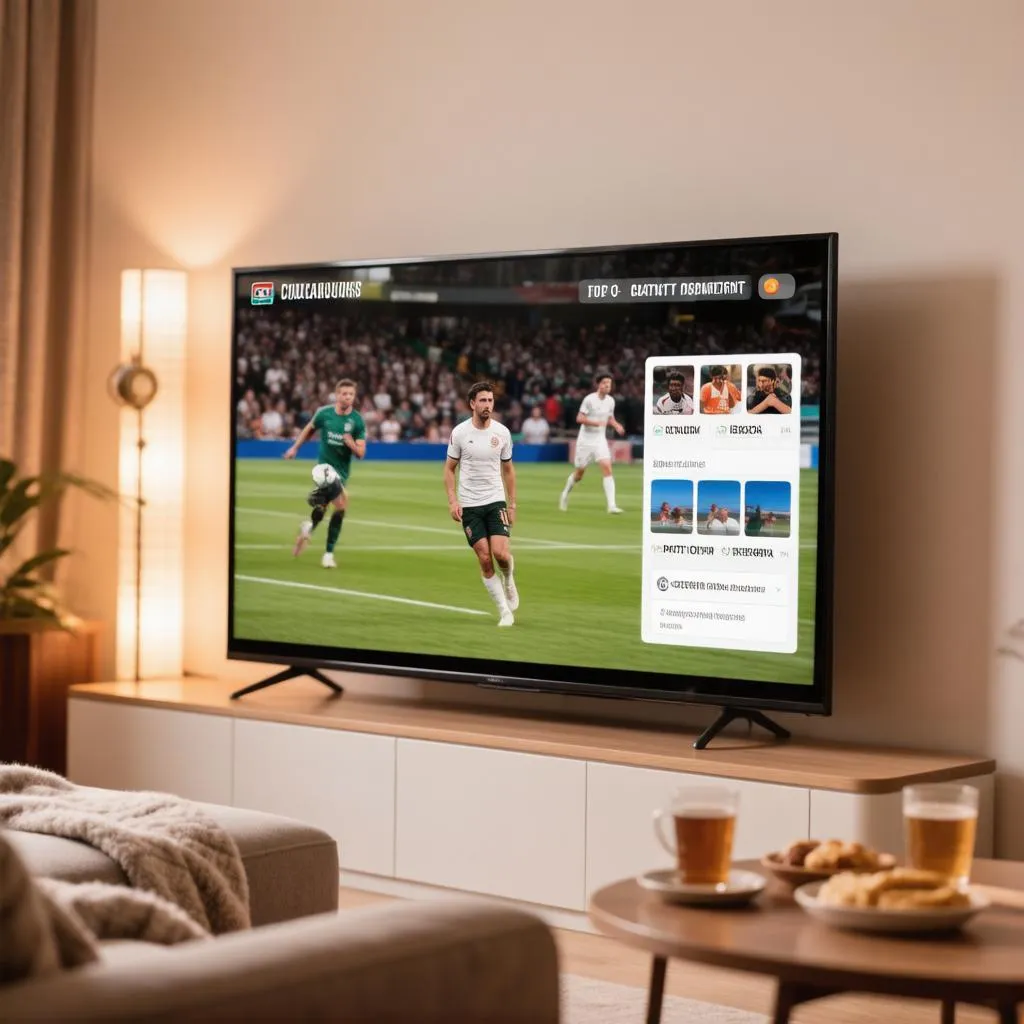
Every football fan has seen it happen in real time: a goal is scored in Manchester, and within minutes the clip appears on YouTube, free, official and in crisp quality — posted by the league itself. Nobody hacked anything. The rights holders chose to give it away. Meanwhile the full live match sits behind a paywall that costs more than a restaurant dinner, and the gap between those two facts is not an accident, a mistake or generosity. It is strategy, written into contracts that most fans have never read and would find fascinating if they had. The free highlights and replays that populate YouTube, broadcaster apps and free channels are not leaks around the paywall; they are carefully engineered windows into it, designed by rights holders who understand something counterintuitive: the best way to sell live sport is to give part of it away. Understanding that machinery — who owns what, who is allowed to publish what, and why the rules differ between a two-minute clip and a full replay — explains almost everything about how modern sports coverage works.
The rights contract: the document behind everything
Sports broadcasting begins with a contract between a competition — a league, a federation, a tournament — and the buyers of its media rights. Those buyers are broadcasters, streaming platforms and, increasingly, the competitions themselves. The contract divides the rights into categories, and the categories are the entire architecture of what viewers can and cannot see for free.
The standard split looks like this. Live rights cover matches as they happen, in full, and they are the most expensive layer by an order of magnitude. Near-live rights cover clips and extended highlights within defined windows — typically minutes or hours after the final whistle. Delayed rights cover full-match replays after a waiting period, often a day or more. Archive rights cover historical footage, sometimes unlimited and sometimes restricted to specific anniversaries. And editorial rights allow news programmes to show short excerpts of the day’s action, which is why a news bulletin can legally air a goal without holding a match licence.
This layering explains the single most confusing phenomenon in sports viewing: why the same league can be fully free in one country and fully paywalled in another. Rights are sold territory by territory, often to different buyers at different prices, and the free windows that exist in one market may simply not have been sold in another. The Brazilian broadcaster that streams full matches free on YouTube is not more generous than its British counterpart; it bought a different package, at a different price, in a market with different economics.
Why giving content away sells more than hiding it
The logic of the free window is the part that surprises people who assume rights holders would lock everything down. The strategy rests on a simple observation about how fandom actually forms: nobody becomes a paying subscriber to a sport they have never seen. Free highlights are the top of a funnel, not a hole in the bucket.
The mechanics work through several reinforcing effects at once. Highlights keep casual fans connected to leagues and narratives between matches, so that when a marquee fixture arrives, they already care about the outcome. Clips travel through social platforms at a speed no paywall can match, and every share is unpaid marketing for the paid product. Younger audiences — the demographic most likely to have never owned a cable subscription — encounter the sport first through free content, and the highlights habit becomes the subscription habit at exactly the moment life circumstances allow it. And for the broadcaster, free clips on owned channels generate advertising revenue themselves, which means the “free” content is not charity at all; it is a second product line.
The evidence for the strategy’s success is visible in the behaviour of the rights holders themselves. The competitions that manage their own digital presence — the major football leagues chief among them — post their own highlight packages within hours of matches, because they have concluded that the audience growth from free clips outweighs the subscriptions the clips might theoretically cannibalise. If giving highlights away were losing them money, the practice would have ended years ago.
The windows and the rules that shape them
Free content is not just created; it is scheduled, and the scheduling follows rules that are stricter than most viewers imagine. The systems differ between competitions, but the patterns repeat:
| Content type | Typical release window | Common restrictions | Who usually holds the right |
|---|---|---|---|
| In-match clips and goals | Minutes after the event | Often delayed by a set number of minutes or hours for the paying broadcaster’s benefit | The competition itself, or the live rights holder |
| Extended highlights | Same evening, usually 2–6 hours after the match | Limited length per match; geo-blocked in some territories | The competition, or the highlights buyer |
| Full-match replay | 24 hours to several days later | Frequently behind the paid platform; sometimes free on FAST channels | The live or delayed rights holder |
| Magazine shows and analysis | Weekly, on broadcast schedule | Free-to-air by design; available on catch-up apps | The highlights holder, often a free broadcaster |
| Archive and classic matches | Permanent library, no window | Occasionally restricted for re-broadcast negotiations | The competition, or archive licensees |
Reading the windows explains the rhythms fans notice but rarely question. Goals appear on social media after a delay measured in minutes rather than seconds because the paying live broadcaster bought the right to be first — the competition will not undercut the product it just sold. The famous Saturday-evening highlights show exists because its broadcaster bought specifically the highlights package, not the live one, and its schedule slot was part of the deal. And the full replay’s 24-hour delay protects live audiences while feeding the demand of viewers in other time zones, who are the replay’s natural market.
The BBC model: highlights as a public service
The United Kingdom offers the purest example of free highlights operating as an institution rather than a marketing tactic. The BBC holds no live Premier League rights at all, yet its Saturday-night highlights programme has covered every round of every season for decades, and its catch-up service makes each programme available on demand shortly after broadcast. The arrangement exists because the highlights package was deliberately separated from the live rights and reserved for free-to-air television — a decision rooted in a broadcast culture that treats major national sport as a public good, not merely a commercial product.
The public-service model extends beyond football. Tennis grand slams, the Olympics, six-nations rugby and dozens of domestic competitions appear free on national broadcasters across Europe precisely because their rights packages include a free-to-air layer, either by regulation or by negotiation. In some countries, laws list specific events that must be available free — the so-called listed events regime — which is why certain finals and tournaments cannot disappear behind paywalls regardless of what the market would pay. The principle, whatever its legal form, is the same: some sport is considered part of the shared culture, and the law or the licence agreement keeps it that way.
YouTube, FAST channels and the new free storefront
The newest chapter in this story is the migration of free highlights from television to the open internet, and it has changed the scale of what “free” means. Rights holders now operate their own channels as primary distribution — full highlight packages, press conferences, documentaries, classic matches — monetised by advertising rather than subscriptions. Alongside them, the FAST platforms — free ad-supported streaming television — have become a second storefront: dedicated sports channels running on schedules, carrying archives, replays and studio content that the rights holders license out precisely because the marginal cost is zero and the audience reach is enormous.
The economics reward both sides, which is why the trend keeps accelerating. The rights holder earns advertising income from content that would otherwise sit in a vault; the platform gets premium sports branding without paying live-event prices; and the viewer gets a library that grows every season. The content that flows through this system is almost exclusively the non-live layers — replays, archives, analysis, delayed windows — because the live layer remains the paid product’s core. But the non-live layers, as any long-time fan knows, are where most of a sport’s storytelling actually lives.
What this means for the viewer
The machinery, once understood, converts into practical knowledge, and the rules it produces are few but firm:
- Free content is regional by design — rights are sold territory by territory, and the platforms check location; a free window in one country does not travel.
- The live layer stays paid almost everywhere — no rights holder gives away live matches as policy, because live exclusivity is the product the entire ecosystem funds.
- Highlights are the competition’s most valuable free asset — and they appear fastest on the channels the competition itself controls, because those channels serve the funnel directly.
- Replays follow delays, not whims — the waiting period protects live audiences and time-zone viewers alike, and it rarely shortens.
- The free tier grows in good markets and shrinks in bad ones — where competition for rights is fierce, buyers pay more for exclusivity and free windows narrow; where the market is soft, free packages expand.
These rules explain the landscape better than any app store search, and they predict its direction: as streaming economics mature, rights holders are experimenting with hybrid windows — free live coverage of selected fixtures, longer free replay periods, deeper archives — wherever the audience-growth mathematics beat the subscription mathematics.
The architecture behind the free feed
The goal clip that appears minutes after a match, the Saturday highlights programme that has outlived every league it covers, the classic final streaming free on a Tuesday night — none of these exists by accident. Each one is the visible surface of a rights architecture built with almost legal precision: live layers sold separately from highlights, windows timed to protect paying audiences, free packages bought deliberately by broadcasters who want them, and competitions running their own free channels because the funnel economics favour it. For the viewer, the practical takeaway is a change of perspective. The free highlights are not the crumbs left behind the paywall; they are the front door, built and maintained on purpose. And the fans who understand which doors exist, in which countries, on which schedules, get from the modern sports ecosystem something its designers intended all along: enough of the game, freely and legally, to keep the whole system — and the fandom — alive.